
Mon - Fri: 8:00am to 6:00pm
Sat: 9:00am to 4:00pm
Sunday: Closed
Ridgewood, NY & the surrounding area

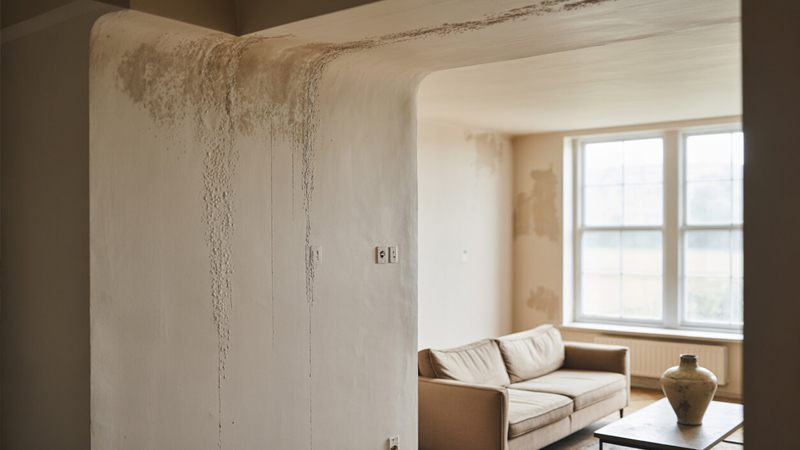
There’s a certain stillness in old buildings. The kind that makes you lower your voice without knowing why. You can run your hand along the wall and feel the years pressed into it—faint ripples, small cracks, that chalky softness that gives a little under your fingers. The paint might have dulled. The corners might have crumbled. But somehow, it feels alive. That’s what old plaster does. It doesn’t just coat a surface; it carries time. You can see the fingerprints of the craftsman who built it, the brush marks, the trowel sweeps. It was mixed by hand once—lime, sand, maybe horsehair or straw for strength—and spread slowly, carefully. The wall was never perfect, and that’s exactly what made it beautiful.
People often see age as damage. They see cracks and think failure. But in old plaster, those tiny fractures aren’t just flaws—they’re the story of a home that’s settled into itself. They’re proof that something made by hand has survived long enough to bend without breaking. We’ve been called to restore plaster walls that most contractors would rather tear down. It’s faster, they say. Easier. But what they forget is that replacing old plaster isn’t fixing the problem—it’s erasing history.
Once you’ve seen how the light moves across an original plaster surface—the way it glows instead of reflecting harshly—drywall just doesn’t compare. It’s flat, too clean, too quiet. Old plaster hums with life.
There’s a rhythm to restoring plaster that can’t be rushed. You scrape away what’s weak, clean the dust, and find the good bone underneath. It’s slow work, and that’s what makes it satisfying. Some walls surprise you—patches of the original lime mix still solid after a hundred years. Others crumble if you breathe too hard.
Every repair feels different. You learn to listen to the sound of the trowel, to feel when the plaster is ready—not too wet, not too dry. When we fix a section, we match not only the color but the texture, the weight, the way it breathes. Sometimes we even blend new plaster with a bit of the old, so the wall remembers where it came from.
What people forget is that plaster isn’t decoration—it’s architecture. In older buildings, it wasn’t just thrown on the wall. It was part of how the structure worked. It expanded and contracted with the seasons. It absorbed humidity in summer and released it when things got dry. It kept homes cool before air conditioning was even a thought.
That’s why old plaster deserves patience. It’s not outdated—it’s intelligent. It knew how to breathe before we tried to seal everything behind paint and drywall. You can’t mass-produce that kind of understanding.
Every so often, when we’re patching a wall or repairing moulding , someone who lives there stops to watch. They’ll ask if it’s worth saving. We’ll tell them yes, and then point to a tiny detail they never noticed—a swirl, a ridge, a hidden pattern under paint. You see the look on their face change. That’s the moment they realize what they have isn’t broken. It’s just waiting to be seen properly again.
© 2021. LITUMA PLASTERING. All Rights Reserved
Website Development | Hosting | SEO | Digital Marketing
